THE ARK: Tu Wei-Cheng Solo Exhibition

Exhibition Dates
05.28.2022–08.06.2022
Reception
05.28.2022 (Sat.) 4:30 p.m.
Tina Keng Gallery B1, No. 15, Ln. 548, Ruiguang Rd., Neihu Dist., Taipei, Taiwan 11492
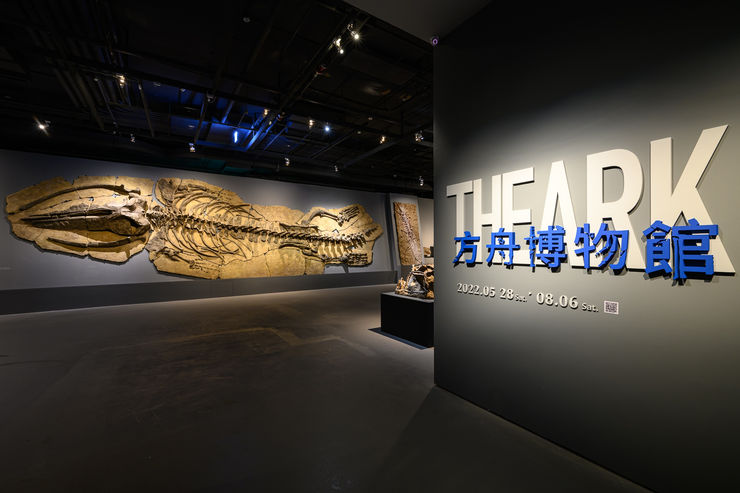
The Tina Keng Gallery is pleased to present The Ark: Tu Wei-Cheng, a culmination of the artist’s creative practice of 20-plus years that embodies his attempt to reconfigure the inner workings of a museum. Through the lens of museology and archaeology, Tu has recast three of his emblematic works, Bu Num Civilization (2000–), Krabi Giant Ruins (2018), and Archaeological Site of the Whale Legend in Suzu (2021) into an ark of cultural intervention on which fiction, reality, the past, present, and future merge. Read more
THE ARK MUSEUM link → https://www.thearkmuseum.com
EXPERIENCE THE ARK MUSEUM ↓
THE ARK: Tu Wei-Cheng Solo Exhibition
Exhibition Dates│ 05.28.2022–08.06.2022
Reception│ 05.28.2022 (Sat.) 4:30 p.m.
Venue│ Tina Keng Gallery (B1, No. 15, Ln. 548, Ruiguang Rd., Neihu Dist., Taipei, Taiwan 11492)
The Tina Keng Gallery is pleased to present The Ark: Tu Wei-Cheng, a culmination of the artist’s creative practice of 20-plus years that embodies his attempt to reconfigure the inner workings of a museum. Through the lens of museology and archaeology, Tu has recast three of his emblematic works, Bu Num Civilization (2000–), Krabi Giant Ruins (2018), and Archaeological Site of the Whale Legend in Suzu (2021) into an ark of cultural intervention on which fiction, reality, the past, present, and future merge.
Bu Num Civilization, which Tu unveiled in 2000, is a fictitious archaic civilization in Taiwan. Conceived by the artist himself, the project involves excavation of the archaeological site, documentation of the excavation process, exhibition of the unearthed artifacts, and promotion of this event. What he has created is a complex history of civilization that underpins the entire project: The manufacture of artifacts, the system of symbology, and the fabrication of historical narrative. This approach justifies the legitimacy of these works, at the same time, subverting the viewer’s perception with the pretense of archaeological discoveries, blurring the line between reality and fiction.
Based on the provincial emblem of Krabi, Thailand, Krabi Giant Ruins is an archaeological site that the artist contrived in 2018 inside an island cave in Krabi. The site of the faux fossils of giant Asura and serpent Naga locked in a death wrestle has become a popular tourist attraction. While Krabi Giant Ruins can be seen as a continuation of Bu Num Civilization, there is a clear distinction between the two. For the latter, the artist is the creator as well as the successor of the fictional civilization, whereas for the former, the artist — as an outsider — cultivates a connection with local mythology, natural surroundings, and the cultural milieu of Krabi through the excavation process, as well as the customized workshops geared toward the local community. In 2021, Tu participated in the Oku-Noto Triennale 2020+, where he presented Archaeological Site of the Whale Legend in Suzu, a work inspired by the Mawaki Site from the Jōmon period in Ishikawa Prefecture, Japan. The 11.5-meter-long fossils of a strange creature not only are a visual spectacle that emanates creative force, but also embody the artist’s ingenuity to conjure an imagined reality crafted through an authentic historical narrative.
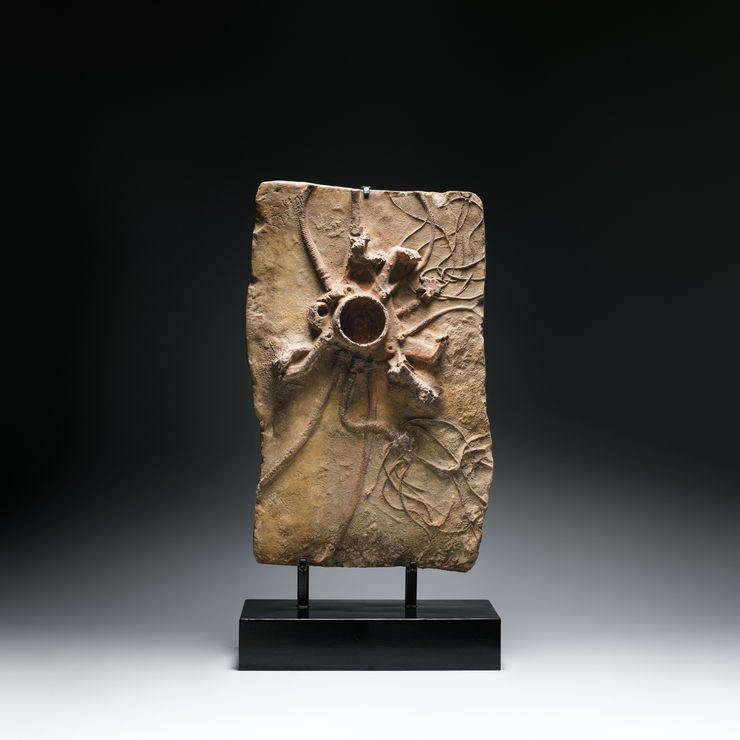
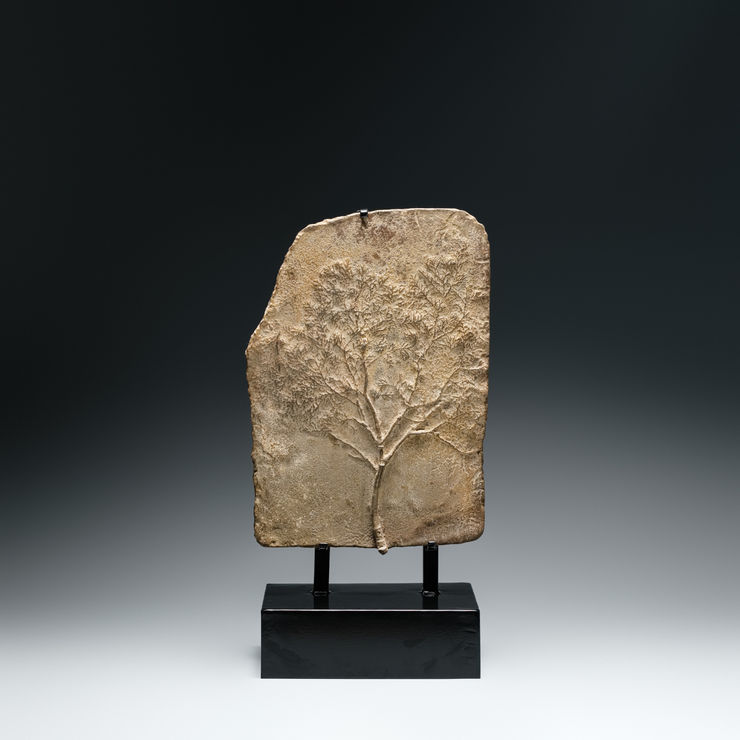
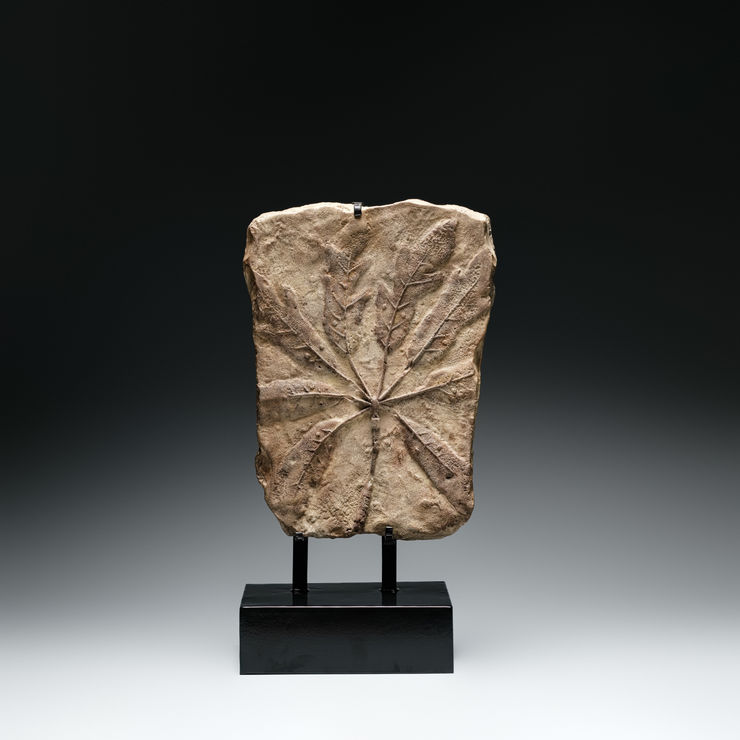
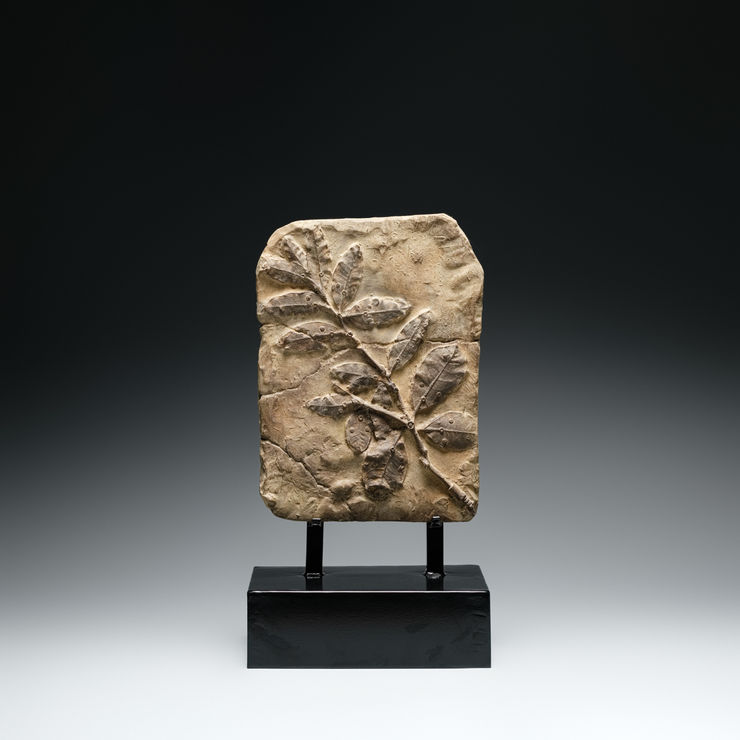
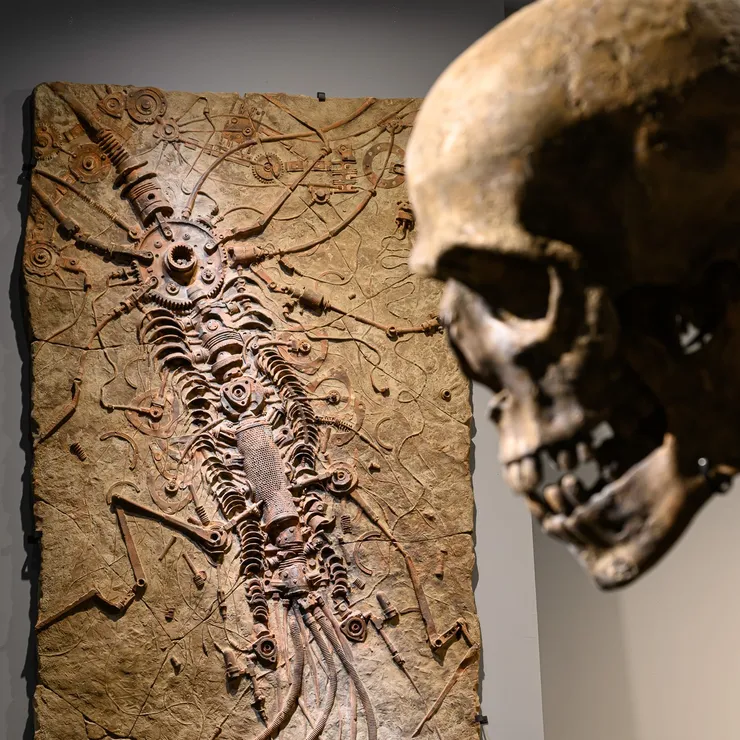
For Tu’s latest solo exhibition The Ark, mechanical parts, fragments, and native plants are amalgamated, imprinted, then cast in artificial stone: The result is faux fossils of an unknown ancient creature. The seemingly organic creature and its tentacles comprise industrial parts and mechanical fragments. Installed in the center of the exhibition space are two gigantic fossils: Sha-lu-er, or literally Sharkdeer, a mythical creature in Taiwanese folklore, and Giant Skinner, part of a tall and gigantic species with webbed fingers, portrayed in paleoanthropologists’ prophecy. Also on view is the projection of computer-simulated images of both creatures when they were alive, as well as the non-whale non-beast behemoth from Suzu on the long wall. Tu has opted to stay behind the scenes, erasing any trace of the artist’s creative hand, as though this was a special exhibition of important discoveries in human history. For The Ark of Tu Wei-Cheng, it is precisely by replicating museum mechanisms that the artist has concocted a seamless project where his artistic practice confronts the viewer in its interrogation of museum politics and social politics.
French writer and curator Nicolas Bourriaud, who published a book titled Relational Aesthetics in 1998, defined the term as “A set of artistic practices which take as their theoretical and practical point of departure the whole of human relations and their social context, rather than an independent and private space.” Through Tu’s work, the artist and the viewer become co-participants in conveying the idea of the work. In the context of The Ark, the exhibits in this space have departed from the artist’s original practice and interpretation. In fact, The Ark is built on the collective subconscious, serving as a bridge between the imagined and the actual. It is the artist’s belief that art must return to the human condition, and to the interaction between humanity and the environment. In his practice, the artist perceives the land, space, and materials through manual labor, and conducts workshops where participants, mostly local residents, turn modern objects they have brought into component parts of Tu’s work. The “ancient” work and the contemporary world synchronize, as temporality becomes malleable, and conjures an age-old site of human civilization nestled between past and present where Tu Wei-Cheng has excavated his imagination of civilization and of the modern world, the boundary of time confronted, fantasy and memory indelibly blurred.
About the Artist
Tu Wei-Cheng
Born in Kaohsiung, Taiwan in 1969
Now lives and works in Taoyuan, Taiwan
Tu Wei-Cheng holds an MFA from the Graduate Institute of Plastic Arts of the Tainan National University of the Arts (2005). He now works as an artist, as well as a lecturer at the Taipei National University of the Arts in Taiwan.
He has exhibited internationally, including at Oku-Noto Triennale 2020+, Suzu, Ishikawa, Japan (2021); the Rijksmuseum, Amsterdam, Netherlands (2019); 1st Thailand Biennale, Krabi, Thailand (2018); V&A Museum, London, U.K. (2017); Singapore Art Museum (2013); Gwangju Biennale, Gwangju, South Korea (2012); Guangzhou Triennial, Guangdong, China (2012); Queens Museum, New York, U.S. (2008); Palazzo delle Arti Napoli, Napoli, Italy (2007); and Shanghai Biennale, Shanghai, China (2006).
Pivoting around the idea of self and system, his work is a hybrid of archaeological excavation and contemporary life, where modern technological gadgets are transformed into ancient relics from an imaginary civilization, deeply imbued with an upturned sense of time. Sometimes site-specific, his large-scale installation becomes a manifestation of local folklore and contemporary phenomena, placed in a falsified reality that has crossed paths with the ancient past. The artist contemplates cultural identity, as well as the incongruities and anxieties that ensue, in an effort to reinterpret the Information Age.
-

涂維政, 遺跡化石, 2020
Tu Wei-Cheng, Trace Fossil - MB 06, 2020
-
涂維政, 遺跡化石, 2020.
Tu Wei-Cheng, Trace Fossil - MB 07, 2020.
-
涂維政, 遺跡化石, 2020.
Tu Wei-Cheng, Trace Fossil - MB 09, 2020.
-
涂維政, 遺跡化石, 2020.
Tu Wei-Cheng, Trace Fossil - MB 10, 2020. -
涂維政, 遺跡化石, 2020.
Tu Wei-Cheng, Trace Fossil - MB 11, 2020.
-
涂維政, 遺跡化石, 2020.
Tu Wei-Cheng, Trace Fossil - PM 22, 2020.
-
涂維政, 遺跡化石, 2020.
Tu Wei-Cheng, Trace Fossil - PM 23, 2020. -
涂維政, 遺跡化石, 2020.
Tu Wei-Cheng, Trace Fossil - PM 25, 2020. -
涂維政, 遺跡化石, 2020.
Tu Wei-Cheng, Trace Fossil - PM 28, 2020.
-
涂維政, 遺跡化石, 2022.
Tu Wei-Cheng, Trace Fossil - PM 29, 2022.
-
-